

When I walked into Bert’s Diner for our usual Friday morning bacon-eggs-omelets-coffee-with a side of bullshit, I thought I’d be the first one to take a seat in the back room.
“You ain’t first,” Roxie told me and handed me a menu. “Sam’s back there and he’s really grumpy.”
Sam is our lone African American Mumbler member, in large part because we don’t have a huge African American population and in part because we all grew up together and Sam’s always been a part of our group. Sam went away to a historically black college, came back and went into real estate, amassed a fair amount of property himself and started a county chapter of the NAACP.
During the turbulent times of the 1960s and early 1970s Sam pretty much took a lot of us on to raise in terms of understanding just what black folks were all about. We’d all been brought up in a politely racist society and over time Sam gradually brought us into his world. I don’t want to say he erased all our racism, but he made us think and, I hope, change our views.
Sam and his wife never had children, but they took on most of the black kids in the county. He worked with young people on a lot of levels, from coaching to church to just being there.
When I walked into the back room Sam looked up at me and mumbled a “mornin.” I didn’t say anything, just sat down and took a cup of coffee from Roxie. It wasn’t long before several other mumblers came in. Sam’s silence and long face were duly noted.
“Someone die?” Walter Campbell, our former DA and retired judge asked.
“Not someone. Law and decency,” Sam said.
“Would you care to expand on that before we order? I asked.
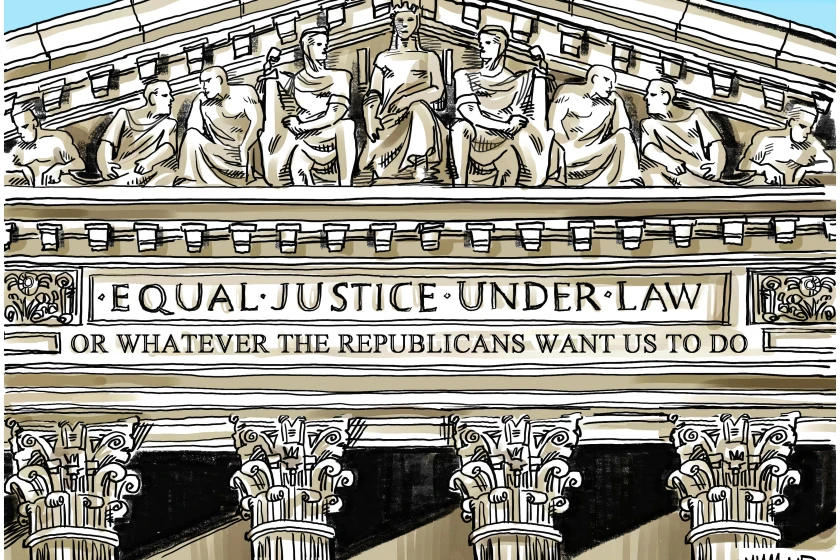
“Where you all been? Didn’t you see what the Supreme Court did this week to immigrants who just happen not to have white skin, or aren’t Christian?”
We allowed that we had.
“Don’t you think saying law and decency died is a bit harsh?” Dean Etheridge sked.
“Not if you got a non-white face,” Sam said.
“Let me lay this out for you. You remember back when Trump called nations that are poor and mostly of color ‘shit-hole’ countries and said he didn’t want any of those folks coming to America. His exact words were ‘Why is it we only take people from shithole countries,’ right? ‘Why can’t we have some people from Norway, Sweden? We always take people from Somalia – places that are a disaster. Filthy, dirty, disgusting, ridden with crime.’
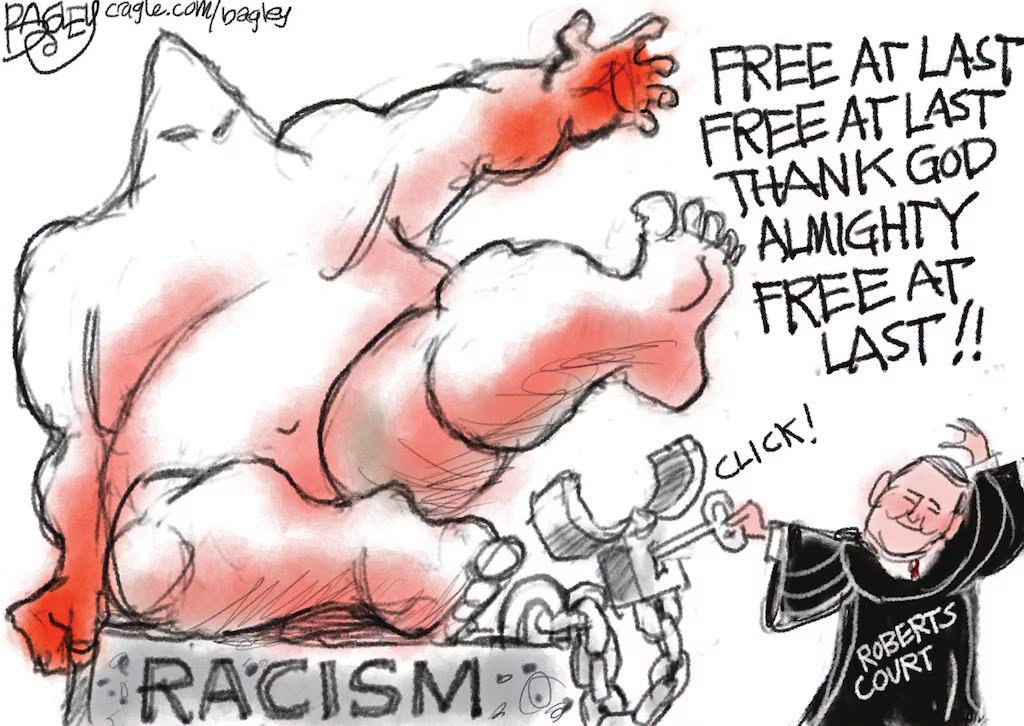
“Well, the Supreme Court just took those words and made them law.”
“I’m still a bit confused about just what the Court did,” Will Sturgill said.
“It’s simple,” Sam said. “The court made it clear that the only proper way to bring black folks into this country is in the hold of a slave ship and let them work for room and board. As slaves if you need it spelled out. But if they want to come here and work for a living, contribute as free men and women, uhuh. Nope.
“All these Haitians, Somalians and the others who are here came in under what’s called ‘Temporary Protected Status.’ Congress created that and it the Secretary of Homeland Security give temporary protection from deportation — plus a work permit — to people already in the United States whose home countries are too dangerous to return to because of war, disaster, or other extraordinary conditions. Haiti, Syria, Venezuela, El Salvador, Ukraine, and a number of other countries have been designated over the years.
“The Supreme Court just tossed that and that means all those folks are now subject to deportation. By the way, all our nursing and retirement homes employ some of those folks, right here in our county. This ain’t some far-off thing.”
“There is another ruling,” Walter said. “That one ruled that Federal courts cannot review DHS decisions to remove a country’s TPS standing. What that means is that even though countries may be dangerous places, DHS can just decide they are not and people wanting out won’t find a safe haven in the US.”
“That isn’t all,” Sam said. “You remember reading that Trump is going to let in a mess of white South Afrikaners? Well, seems like they are planning on giving them goodie bags telling them about America and why they are being given sanctuary here.”
Sam took a folded up piece of newspaper out of his pocket.
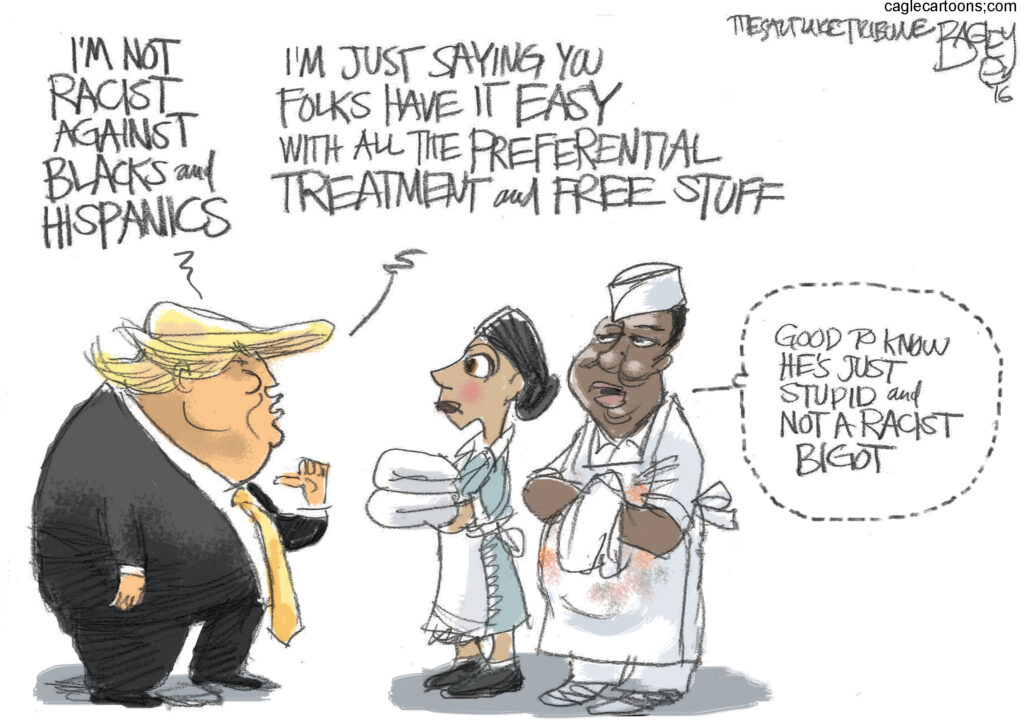
“This is from the New York Times. Here’s what it says about the white folks Trump is welcoming.
“They will get an Android tablet, an American flag and copies of the Constitution and Declaration of Independence. They will also receive a packet of literature that provides a sanitized, Trump-approved view of American and South African history, one that criticizes racial equity and civil rights laws and promotes claims of discrimination against white people.
“The welcome bags include a report commissioned by Mr. Trump during his first term that downplays the role of slavery in the country’s founding, and a children’s book accusing South Africa’s government of ‘favoring the Black population.”
Sam folded up the paper and put it back in his pocket.
“Just in the last few months I feel like I’ve seen most of my life’s work, and the work of others, damn near erased. The Voting Rights Act has been gutted. School kids are being talked that slavery was all about a mess of happy darkies being well taken care of. Now we’ve closed the borders to anyone who’s not white and Christian,” Sam said.
Just then Roxie came in with the first round of food. She put the first plates down and looked around the table.
“You all just looked like someone died,” she said.
“Well, I guess that’s not far off,” I told her. “It’s not someone. It’s our country, our history, our democracy.”
“Trump again?” Roxie asked.
“Who else?” Jordan Jackson asked.